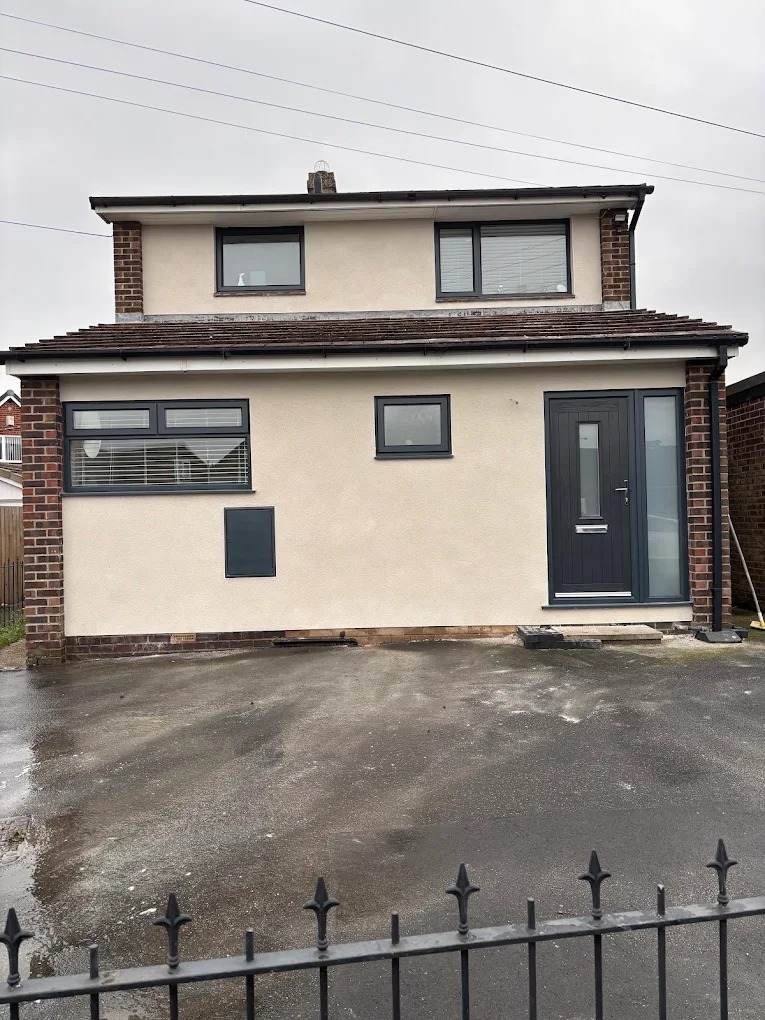
Renders To Suit Your Home And Budget
Neil works with the full range of modern and traditional render systems, so the recommendation you get is based on your walls, not on the one product a salesman wants to shift.
- Silicone render. A flexible, through-coloured thin coat finish that resists cracking, sheds dirt in the rain and never needs painting. The most popular choice for full house renders.
- Monocouche render. A through-coloured one coat system with a traditional scraped texture. Durable, low maintenance and well suited to new builds and extensions.
- Sand and cement render. The traditional approach, applied in scratch and top coats and finished smooth for painting. A solid, cost-effective option for repairs and re-renders.
Every render starts with proper preparation. Old, blown render is removed rather than covered over, walls are checked and made good, and stainless beading is fitted so every corner, reveal and drip edge finishes crisp and true.
How A House Render Job Runs
- Survey and quote. Neil visits, checks the condition of your existing walls and talks you through the right system, with a written price.
- Preparation. Scaffold up where needed, old render off, substrate repaired, windows and paths protected.
- Basecoat and mesh. A reinforced basecoat is applied and levelled, with mesh embedded to control cracking.
- Finish coat. Your chosen colour and texture is applied and ruled to a consistent, even finish across every elevation.
- Snag and clean. Beads and details checked, site swept and cleared, and the job walked round with you before sign-off.
House Rendering FAQs
How much does it cost to render a house in Hull?
It depends on the size of the property, the system you choose and the condition of the existing walls. A semi costs less than a large detached, and silicone systems cost more than sand and cement but never need repainting. Send Neil a photo and rough dimensions for a free, accurate quote.
How long does silicone render last?
A correctly applied silicone render system will typically last 25 to 30 years or more. Because the colour runs all the way through, it will not peel or flake like paint, and a wash-down is usually all the maintenance it needs.
Can you render over old render or pebbledash?
Sometimes, if the existing coating is sound and well bonded. Often the right answer is to remove it first, and Neil will always tell you honestly which applies to your walls after inspecting them.
What time of year can rendering be done?
Most of the year. Modern render systems can be applied in a wide temperature range, and elevations can be protected while they cure. Very cold snaps and heavy rain are worked around, which is normal for external work in East Yorkshire, and most systems should not be applied below around 5°C or when frost is forecast within the next day or two.
What is the difference between silicone and monocouche render?
Monocouche is a single-coat, through-coloured cement-based render, durable and low maintenance but slightly less flexible than silicone. Silicone render is a thin-coat topcoat over a separate basecoat, more flexible, breathable and self-cleaning in the rain. Both are through-coloured so neither needs painting, and the right choice usually comes down to the property and budget rather than one being simply better.
Will rendering increase the value of my house?
A fresh, well-applied render generally improves kerb appeal and can make a real difference to how a property is perceived, particularly where the brickwork was tired or patchy beforehand. It is not a guaranteed like-for-like return, but a smart, modern exterior is one of the more noticeable upgrades a buyer sees first.
How do I choose the right renderer?
Ask to see recent local jobs, ideally the same render system being proposed for your property, and check that preparation, such as removing old render and fitting proper beading, is included rather than treated as an extra. A renderer who explains why a particular system suits your walls, rather than defaulting to whichever is quickest for them, is usually worth trusting with the job.